Bed Bug Treatment · Vero Beach, FL
Bed Bug Treatment in Vero Beach, FL
Bed bugs do not care how nice your home is. I have found them in beachside condos, in snowbird rentals and in brand new houses west of I 95. They are hitchhikers, and our town sees a lot of travelers.
- Same day service option
- Free inspection request
- Vero Beach · Indian River County
Quick answer
Bed bug treatment works when the inspection is thorough and every hiding spot is treated. Bed bugs hide in mattress seams, box springs, headboards, furniture joints and wall outlets. Vero Beach Pest Control connects you with a local technician who confirms the bugs, explains heat and product options, and follows up until they are gone. That is what bed bug control should look like from any bed bug exterminator you hire.
How Bed Bugs Get Into Vero Beach Homes
Vero Beach is a seasonal town. Visitors fill hotels and rentals each winter, and many residents travel north and back. UF/IFAS notes that bed bugs ride on clothing, luggage, bedding and furniture. They also point out that upscale hotels and private homes have had infestations, so good housekeeping alone does not stop them.
Used furniture, mattresses left by the curb, and shared laundry rooms in condos are other common ways they arrive. In buildings with shared walls, bed bugs can travel from one unit to the next.
Signs of Bed Bugs
- Small, itchy bites in a line or cluster that show up after sleeping. Not everyone reacts, so bites alone do not prove bed bugs.
- Tiny dark spots on sheets, mattress seams or the box spring. These are droppings.
- Rusty or red stains on sheets from crushed bugs.
- Shed skins and pale eggs in seams and cracks.
- Live bugs, flat and reddish brown, about the size of an apple seed when grown.
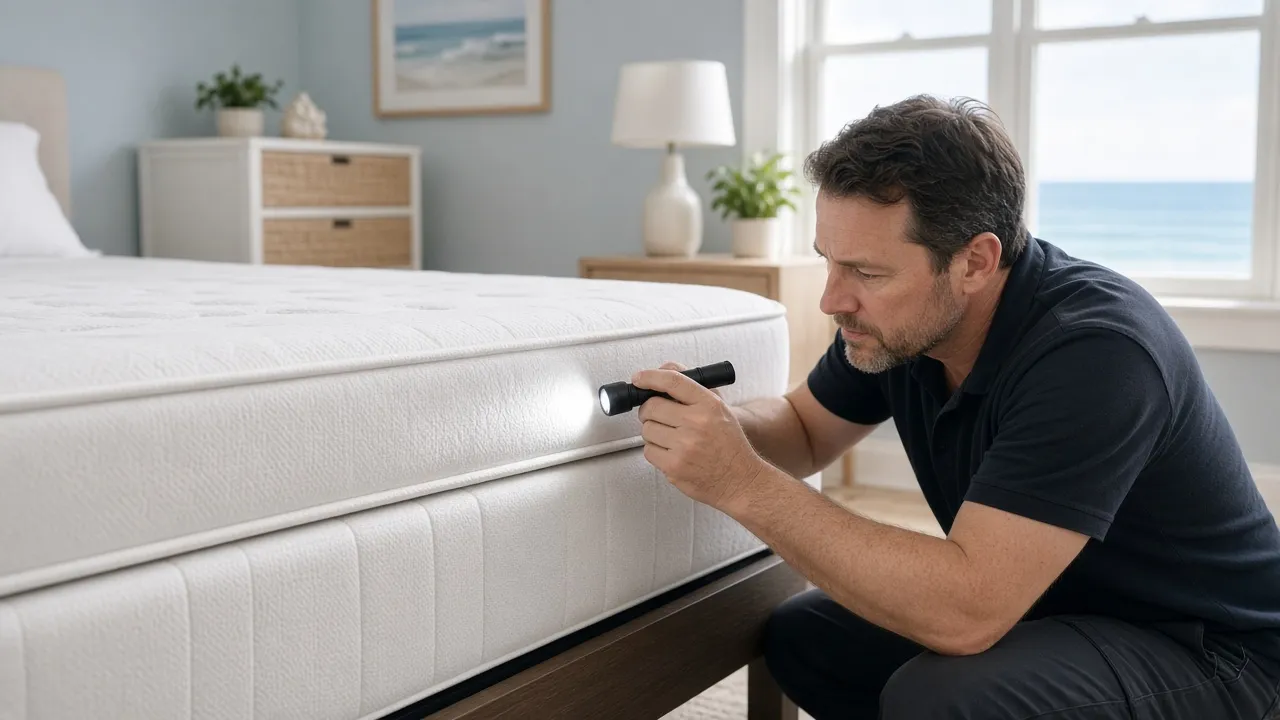
UF/IFAS explains that bed bugs are mostly active at night, which is why infestations are hard to find. A slow, careful look with a flashlight is often the only way to spot them early.
What Your Technician Will Do
- Inspect the bedroom and beyond
Your technician checks mattress seams, box springs, bed frames, headboards, nightstands, couches, recliners, baseboards, curtains and outlets. Rooms next to the bedroom often get checked too.
- Confirm and map the infestation
Your technician confirms live bugs or clear signs and marks which rooms and furniture are affected. That sets the scope of the treatment.
- Explain your options
Options can include heat treatment, products labeled for bed bugs, steam, vacuuming and mattress encasements. Many plans combine methods. The EPA lists several approaches that work together, which fits an integrated plan.
- Prepare and treat
You get a prep list, which usually covers laundering bedding and clothes in hot water and drying them on high heat, and reducing clutter. Then the technician treats each area agreed on.
- Follow up
Bed bug eggs can survive a single visit. Follow up inspections and treatments confirm the problem is solved.
Heat Treatment Explained
Bed bug heat treatment raises the temperature of a room or a whole home to a level that kills bed bugs and their eggs. Fans move the hot air into furniture and cracks. Heat leaves no residue, and many people like that. It does take planning, since some items like candles, medicines and electronics may need to be removed first. Heat also does not stop new bugs from coming in later, so follow up checks still matter.
What Not to Do
- Do not throw out your mattress right away. Infested items carried through the house can spread bugs. Encasements and treatment often save the mattress.
- Do not use bug bombs. The EPA covers foggers in its bed bug safety guidance, and in my experience they do not reach bugs hidden in cracks.
- Do not move to another room to sleep. Bed bugs follow you and spread the problem.
- Do not apply products that are not labeled for bed bugs or for use on beds.
Tips for Travelers and Snowbirds
- In a hotel, check the mattress seams and headboard before you unpack.
- Keep luggage on a rack, not on the bed or floor.
- When you get home, unpack in the garage or laundry room. Wash and dry clothes on high heat.
- Inspect used furniture closely before bringing it inside.
- For rentals, check between guests and act fast if a guest reports bites.
Bed Bug Questions
How long does bed bug treatment take?
Most homes need more than one visit over a few weeks. The size of the infestation and the amount of clutter make a big difference.
Can I get rid of bed bugs on my own?
Small problems can sometimes be handled with steps the EPA lists, but most homes need professional help because bed bugs hide so well.
Do bed bugs spread disease?
The EPA says bed bugs have not been shown to transmit disease. The bites can itch, and the stress and lost sleep are real problems.
Are bed bugs a sign of a dirty home?
No. UF/IFAS notes they turn up in clean homes and upscale hotels. They feed on blood, not dirt.
Is heat treatment better than other methods?
Each method has strengths. Heat works fast with no residue. Products can keep working in cracks. Your technician will explain which mix fits your home.
Same day service option
Get Bed Bug Treatment in Vero Beach
Bed bugs are easier to stop early. Send the short form, and a local technician will reach out to schedule an inspection.
More services
Other pest control services in Vero Beach, FL
Termite Control
Drywood, Formosan and native subterranean termite inspections and treatment plans.
Rodent Control
Roof rat and mouse inspections, trapping and exclusion that seals the gaps.
Roach Control
Palmetto bug and German cockroach plans built on baits, sealing and follow up.
Mosquito Control
Yard mosquito programs that cut breeding sites and treat resting areas.
Ant Control
Baiting plans for carpenter, fire, ghost and white footed ants that reach the colony.
Wildlife Removal
Raccoon, iguana, armadillo and snake problems handled with Florida rules in mind.
Lawn Pest Control
Chinch bug, sod webworm and grub programs built on UF/IFAS lawn care.
Sources
- UF/IFAS Extension: Bed bug
- U.S. EPA: Bed bugs: get them out and keep them out
- U.S. EPA: Bed bugs as a public health issue
- U.S. EPA: Safety issues when controlling bed bugs, including foggers
- U.S. EPA: Introduction to Integrated Pest Management