Lawn Pest Control · Vero Beach, FL
Chinch Bugs and Lawn Pest Control in Vero Beach, FL
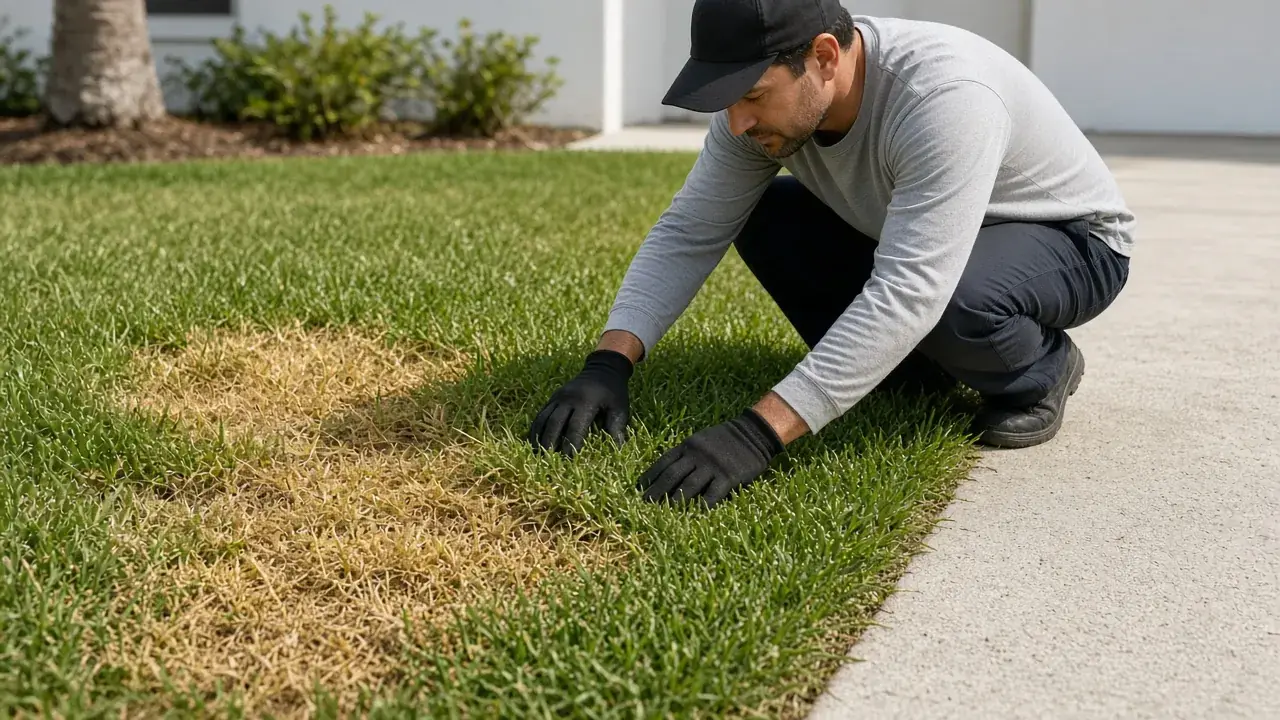
Every summer I see the same pattern. A homeowner waters more and more as a sunny patch of St. Augustinegrass turns yellow, sure it is drought. Then I part the grass at the edge of the brown spot and the little black bugs scatter.
- Same day service option
- Free inspection request
- Vero Beach · Indian River County
Quick answer
Treating lawn insects in Vero Beach is mostly about chinch bug outbreaks, sod webworms and grubs in St. Augustinegrass. Good mowing, watering and fertilizer habits prevent most outbreaks, and targeted treatment handles the rest. Vero Beach Pest Control connects you with a local technician who checks the lawn, names the pest and sets up a plan.
Southern Chinch Bugs: The Big One
The southern chinch bug is the top lawn pest on our coast. UF/IFAS says it rarely grows past 1/4 inch long, yet it causes millions of dollars in damage each year in Florida as homeowners apply insecticides and replace dead grass. It feeds mainly on St. Augustinegrass, which covers many Vero Beach yards.
UF/IFAS also notes that damage shows up as yellow, roughly circular patches. It usually starts in water stressed spots along the edges of a lawn or where the grass gets full sun. Driveway edges, sidewalk edges and areas near the street are where I check first.
How to Spot an Outbreak
- Yellow patches that spread outward and do not green up with water.
- Damage that starts near hot pavement or in full sun.
- Tiny black insects with white wing marks at the base of the grass blades, in the edge between healthy and dying grass.
- Young nymphs that are red with a white band.
A simple check: push a can with both ends cut out into the soil at the edge of the damage, fill it with water and watch for bugs floating up.
Sod Webworms and Other Lawn Pests
- Sod webworms: Their larvae chew grass blades at night and leave ragged, notched blades. Small moths flying up from the lawn at dusk are often the adults.
- Grubs: White, C shaped beetle larvae that feed on roots. The grass may peel back like a rug. Armadillos and raccoons digging in the lawn are a common clue.
- Whiteflies: Tiny white insects on hedges and ornamentals that leave sticky honeydew and black sooty mold.
Lawn Care That Prevents Outbreaks
UF/IFAS lists cultural practices that make St. Augustinegrass less likely to suffer chinch bug outbreaks:
- Mow high and often: Keep St. Augustinegrass at 3 to 4 inches, and never remove more than one third of the blade at a time. Use a sharp blade.
- Go easy on nitrogen: Large amounts of quick release nitrogen push fast growth and make the lawn more appealing to the pest.
- Water wisely: Irrigate only after wilting begins, when the leaf edges start to curl. Overwatering and drought stress both cause trouble.
These steps are also simple ways to protect the Indian River Lagoon, since less fertilizer means less runoff.
What Your Technician Will Do
- Inspect the whole lawn
Your technician walks the lawn, checks edges and sunny spots, and parts the grass to find the pest.
- Name the pest
Chinch bug damage, webworms, grubs and disease can look alike from a distance. Getting it right avoids wasted treatments.
- Spot treat when possible
Targeted treatment of active areas and a buffer around them is often enough. Whole yard treatments are used only when needed.
- Rotate products
UF/IFAS tells how Floratam St. Augustinegrass, released in 1973, held off the pest at first, but some populations adapted to it within twelve years. Pests that adapt that well are a good reason to rotate product types rather than use the same one every time.
- Coach on lawn care
Your technician shares mowing, watering and fertilizer tips based on UF/IFAS guidance.
- Follow up
A return visit checks that the treated areas are recovering and no new hot spots have formed.
Lawn Insect Questions
How do I know if my lawn has chinch bugs or drought stress?
Drought stressed grass greens up with water. Chinch bug damage keeps spreading. Parting the grass at the edge of a patch usually reveals the bugs.
When are chinch bugs worst in Vero Beach?
Damage is easiest to see in hot, dry spells. UF/IFAS notes the southern chinch bug usually stays active through the winter in Florida, sheltered at the base of the grass, except for a short rest in north Florida.
Can I just plant a resistant grass?
Floratam was bred to resist this pest, but UF/IFAS reports some chinch bug populations adapted to it within twelve years. Good lawn care still matters with any grass.
Will overwatering kill chinch bugs?
No. Too much water can lead to disease and weak roots. UF/IFAS suggests watering only after wilting begins.
Do I need grub control every year?
Not always. Treat grubs only when a check shows enough of them to cause damage.
Same day service option
Get Help With Lawn Insects in Vero Beach
A yellow patch can spread fast in summer. Send the short form, and a local technician will reach out to inspect your lawn.
More services
Other pest control services in Vero Beach, FL
Termite Control
Drywood, Formosan and native subterranean termite inspections and treatment plans.
Rodent Control
Roof rat and mouse inspections, trapping and exclusion that seals the gaps.
Roach Control
Palmetto bug and German cockroach plans built on baits, sealing and follow up.
Bed Bug Treatment
Careful bed bug inspections and treatment plans for homes, condos and rentals.
Mosquito Control
Yard mosquito programs that cut breeding sites and treat resting areas.
Ant Control
Baiting plans for carpenter, fire, ghost and white footed ants that reach the colony.
Wildlife Removal
Raccoon, iguana, armadillo and snake problems handled with Florida rules in mind.
Sources
- UF/IFAS Extension: Southern chinch bug
- UF/IFAS Extension: Indian River County Extension office
- U.S. EPA: Introduction to Integrated Pest Management
- FDACS: Pest control consumer rights and responsibilities