Rodent Control · Vero Beach, FL
Rodent Control in Vero Beach, FL
The call usually starts the same way. Someone hears scratching over the bedroom ceiling right around midnight and wants to know if it is a squirrel. In Vero Beach, nine times out of ten in my experience, it turns out to be a rat.
- Same day service option
- Free inspection request
- Vero Beach · Indian River County
Quick answer
Good rodent control in Vero Beach starts with finding how rats and mice get inside. Trapping removes the animals already in the home. Sealing the gaps keeps new ones from moving in. Vero Beach Pest Control connects you with a local technician who inspects the roofline, attic and yard, then builds a plan around what is found.
Why Rats Love Our Neighborhoods
Rats need food, water and shelter. Our town hands them all three. Palm trees, thick hedges and climbing vines give cover and a path to the roof. Fruit trees, bird feeders and pet food left on a lanai give food. Pools, ponds and irrigation give water. Homes near the lagoon and older neighborhoods with mature trees tend to see steady rodent pressure.
The Rodents We Find
- Roof rats: The most common rat I find in Vero Beach attics. Slim, dark and great climbers. They travel along fences, power lines and tree limbs and often nest in attics, palm crowns and dense shrubs. Their tail is longer than the head and body.
- Norway rats: Heavier and more likely to burrow. They live at ground level, under slabs, woodpiles and debris.
- House mice: Small with large ears. A mouse can squeeze through a gap about the width of a pencil.
Signs of Rats in the House
- Scratching or running sounds in the ceiling or walls, mostly at night.
- Droppings in the attic, the garage, behind appliances or in kitchen cabinets.
- Gnawed wires, insulation, food boxes or the edges of vents.
- Dark rub marks along beams, pipes or entry holes where oily fur brushes past.
- Half eaten fruit under citrus trees or palms.
- Pets staring or pawing at one spot on a wall.
A rodent problem is more than noise. Rats chew wiring, foul insulation and spoil stored food. Getting ahead of them early saves money on repairs.
What Your Technician Will Do
- Inspect from the roof down
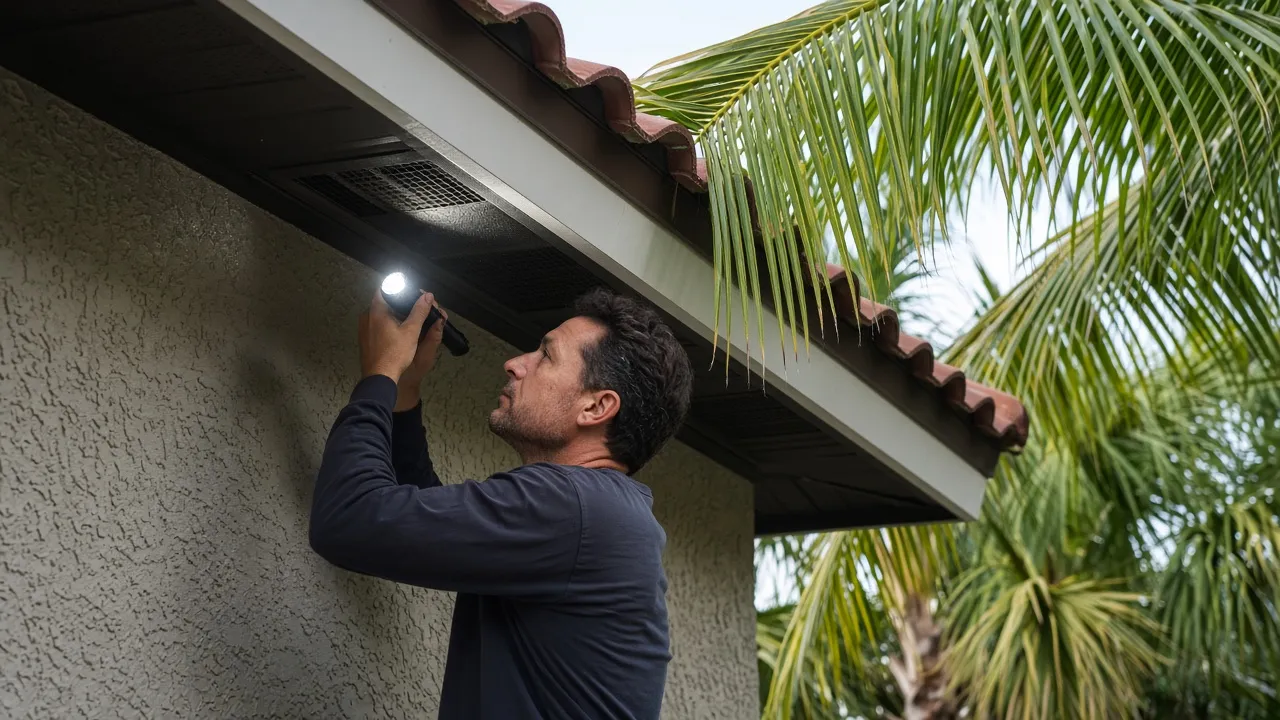
Your technician walks the outside of the home and looks at the roofline, soffits, roof vents, gable vents, plumbing stacks, AC line openings and garage door seals. Then the attic and garage get a close look for droppings, nests and travel paths.
- Remove the rodents inside
Traps go along the paths the rats use. Traps placed inside the home make it easier to remove the animals, so you do not deal with odors from a rodent that dies in a wall.
- Seal the entry points
This is the step that makes the difference. Gaps get closed with materials rats cannot chew through easily, such as hardware cloth, metal flashing and sealants made for the job. Open soffit returns and torn vent screens are common fixes.
- Use bait only where it fits
Rodent bait has a place outside in locked stations. The EPA has rules for how rodenticides are sold and used, including requirements for bait stations to reduce risks to kids, pets and wildlife. Your technician follows the label and those rules.
- Follow up
Return visits check traps, confirm no new activity and make sure every seal is holding.
Why a Rat Exterminator Seals Instead of Just Baiting
I have seen homes that had bait boxes around them for years and still had rats in the attic. Bait can kill some rats, but if the gaps stay open, new ones keep coming in. Once the home is sealed and the rats inside are trapped out, the problem usually ends. That approach matches the integrated pest management steps the EPA recommends: find the cause, remove what draws pests, and use products only when needed.
Steps You Can Take Today
- Trim tree limbs and palm fronds so they sit a few feet away from the roof.
- Pick up fallen fruit from citrus, mango and avocado trees.
- Bring pet food inside at night and store bird seed in metal bins.
- Keep garbage in cans with tight lids.
- Clear stacked lumber, old pots and debris away from the house.
- Check screens on soffit and gable vents for holes.
Rodents and Health
Rodents can carry germs, and their droppings and urine should not be swept up dry. Wear gloves, wet the area with a disinfectant first, and then wipe it up. Wash your hands well afterward. If a large mess is in the attic, let a professional handle the cleanup.
Rodent Control Questions
How do I know if it is a rat or a squirrel in the attic?
Rats are most active at night. Squirrels are active in the daytime. Dropping size and shape also help tell them apart. A technician can confirm which animal it is.
How long does rodent control take?
Most homes need a few visits over a couple of weeks. Trapping removes the rats inside, and sealing stops new ones. The timeline depends on how many entry points there are.
Is rat poison safe to use inside?
Bait inside a home can lead to rats dying in walls and can put pets and children at risk. Most technicians prefer traps inside and locked bait stations outside, used as the label directs.
Why do I have rats in a newer home?
Even new homes have gaps around pipes, vents and rooflines. Rats only need a small opening. Nearby trees and fruit make it easy for them to reach the roof.
Will rats leave on their own?
Rarely. Once they find food and shelter, they stay and breed. Removing them and sealing the home is the reliable fix.
Same day service option
Get Rodent Control in Vero Beach
Scratching in the ceiling is a sign to act now, before rats chew through wiring or ductwork. Send the short form and a local technician will reach out to schedule an inspection.
More services
Other pest control services in Vero Beach, FL
Termite Control
Drywood, Formosan and native subterranean termite inspections and treatment plans.
Roach Control
Palmetto bug and German cockroach plans built on baits, sealing and follow up.
Bed Bug Treatment
Careful bed bug inspections and treatment plans for homes, condos and rentals.
Mosquito Control
Yard mosquito programs that cut breeding sites and treat resting areas.
Ant Control
Baiting plans for carpenter, fire, ghost and white footed ants that reach the colony.
Wildlife Removal
Raccoon, iguana, armadillo and snake problems handled with Florida rules in mind.
Lawn Pest Control
Chinch bug, sod webworm and grub programs built on UF/IFAS lawn care.